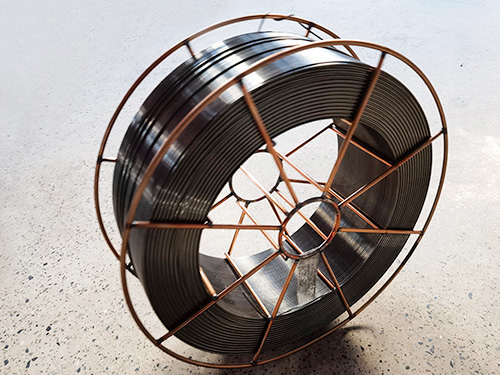
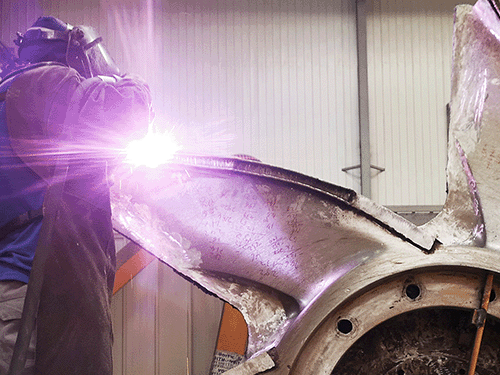
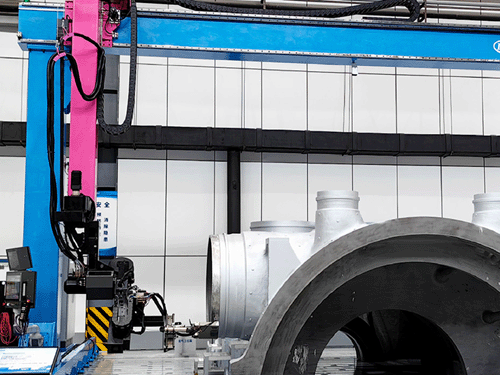
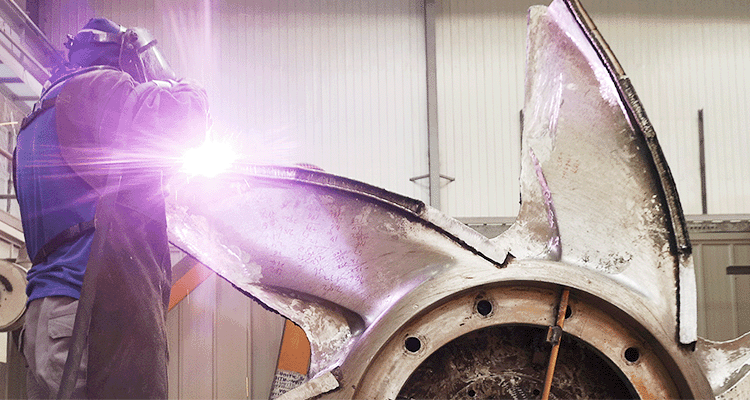
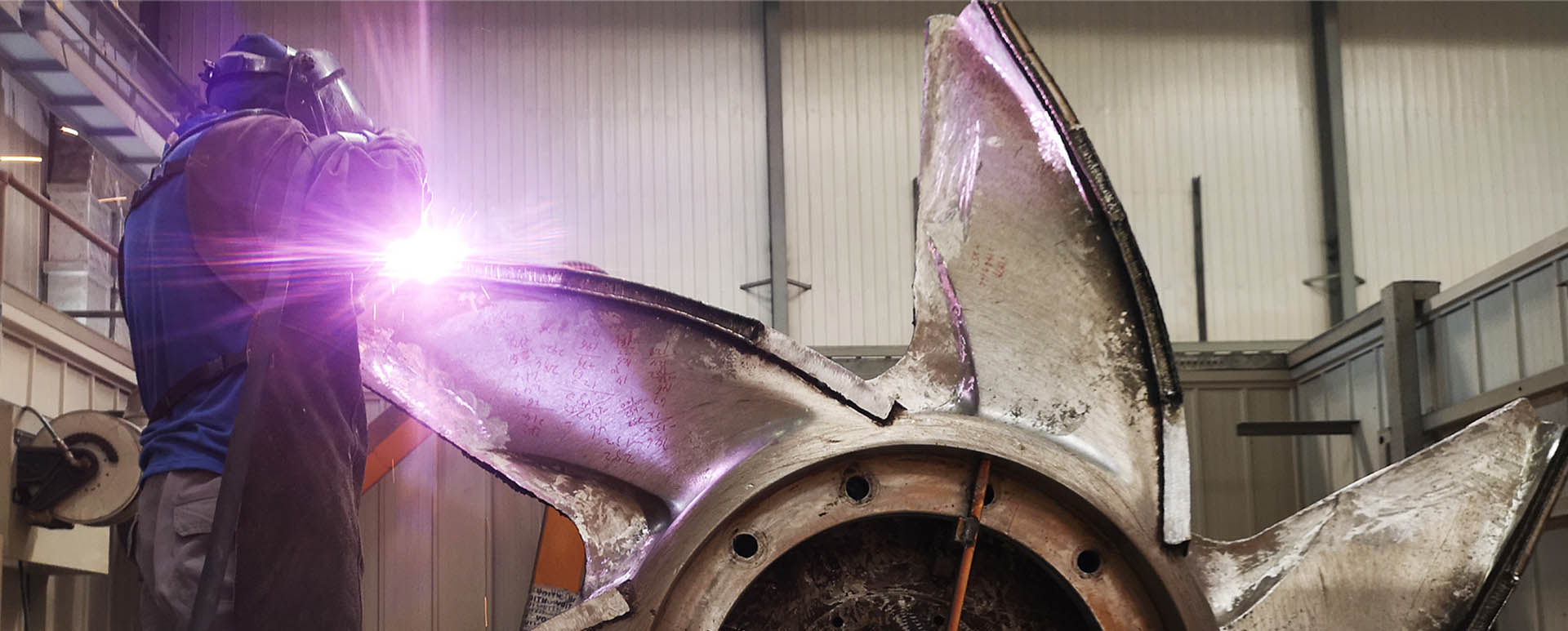
When comparing G-welding (gas shielded solid core/TIG welding) with TIG welding (argon arc welding), the results are strikingly different. Efficiency, appearance, precision, and application scenarios are all clearly distinguished.
1. Post-Weld Appearance Differences G Welding Wire (Gas Shielded Arc Welding) Features full weld formation with wide fusion width, rough weld patterns, minimal spatter, and a slightly oxidized surface. Suitable for structural components, thick plates, and industrial mass production where conventional strength requirements can be met without excessive grinding.
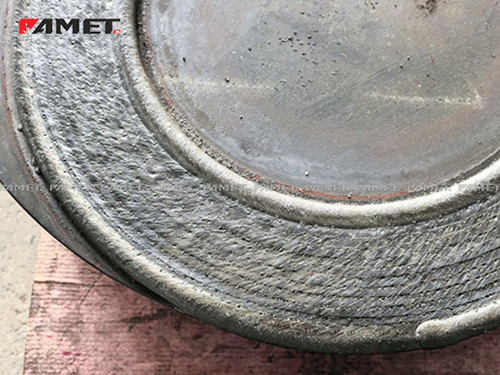
2. TIG Welding Wire (TIG Welding) Produces fine, smooth welds with uniform patterns, near-mirror-like texture, zero spatter, no oxidation, and no slag, achieving maximum cleanliness. Ideal for high-end appearance parts, thin plates, and precision assembly, where polishing can reach decorative-grade aesthetics.
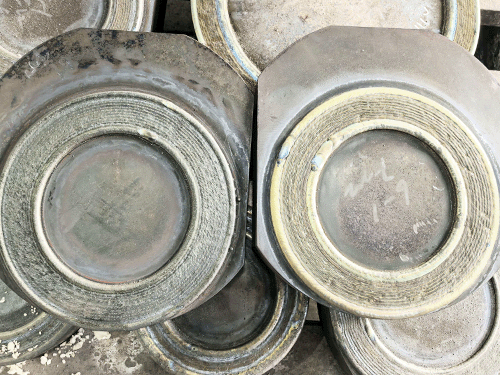
3. Strength and Internal Quality G Welding Wire Offers sufficient penetration depth and high tensile strength, suitable for load-bearing structures. Continuous wire feeding ensures high deposition efficiency and strong joint stability, meeting strength standards for construction machinery, steel structures, and pressure vessels. TIG Welding Wire Achieves higher purity in welds, extremely low porosity/slag inclusion rates, controllable heat input, minimal deformation, and low stress. Perfect for aviation, medical, and food equipment applications requiring stringent purity. For aesthetics, precision, and cleanliness → Choose TIG welding wire. Efficiency!Select G wire. Elegance!
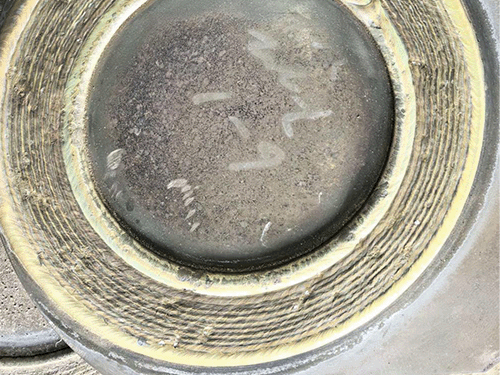
4. TIG. One weld reveals the difference.
TIG welding wire exhibits exceptional resistance to metal-to-metal wear, erosion, and thermal damage in high-temperature corrosive environments, along with strong resistance to erosion and heat loss. It produces minimal slag and is well-suited for TIG welding processes.